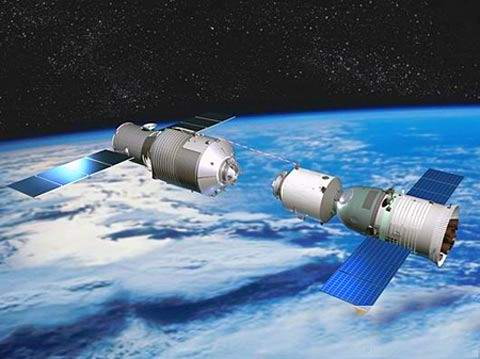
中新网9月29日电 中国载人航天工程总指挥常万全宣布,“天宫一号”目标飞行器准确入轨,发射圆满成功!
北京时间9月29日晚21时16分许,中国在酒泉卫星发射中心载人航天发射场,用“长征二号F”T1运载火箭,将中国全新研制的首个目标飞行器“天宫一号”发射升空。
中国全新研制的载人飞行器“天宫一号”全长10.4米,最大直径3.35米,起飞质量约8.5吨,设计在轨寿命2年,由实验舱和资源舱构成。发射“天宫一号”的“长征二号F”T1火箭全长52米,起飞质量493吨,运载能力为8.6吨。它是在原“长征二号F”火箭基础上改进研制,取消了逃逸系统,采用了新型整流罩,改进了助推器结构,提高了运载能力。
(以上内容摘自搜狐新闻)
【航空词汇知多少?】
人造卫星: artificial (man-made) satellite
运载火箭:launch vehicle/carrier rocket
载人飞船: manned spaceship
国际空间站: international space station
空间探测器: space probe
太空舱:capsule
推进剂:propellant
目标飞行器:target aircraft
只是学会这些词汇还不够,最好的词汇记忆法是什么?当然是通过在句子中的使用来记忆啦。下面我们就来看看这些航空词汇是怎么使用的吧:
On 9th August 1992 at Jiuquan Satellite Launch Center, Long March 2C launch vehicle successfully launchedthe 13th recoverablesatellite.
1992年8月9日,长征二号丁运载火箭在酒泉卫星发射中心成功发射第十三颗返回式卫星。
(发射卫星/火箭动词使用的是launch:launch the satellite/rocket)
As the satellite and the rocket failed to separate according to plan, the satellite did not enter the preset orbit.
由于星箭未能按计划分离,卫星未进入预定轨道。
(卫星进入轨道使用的是enter: enter the orbit)
The Shenzhou seventh airship started the replenishment of propellantin today.
神舟七号飞船于今天开始加注推进剂。
(加注推进剂使用的动词是replenish: replenish the propellant)